Introduction
Diet and Fitness Plan
Last Update: August 10, 2026
In this post, I’ll take you through my diet and fitness plan.
I’ll also give you links to some good on-line tools (as well a tool I put together).
My intent is to inspire you to embark on your own health and fitness journey. Hopefully, some of the resources I’ll mention will be useful, but, ultimately, you’ll have to figure out what works best for you.
There are some basic guidelines that we can probably agree are a good starting point (see the bullet points below).
Your plan is going to be based on your genetics, physical condition, age, type of work you do, type of environment you work in…ad infinitum. However, I’m pretty sure the following guidelines will apply to you:
- Take your annual physical religiously!
- Follow trusted/reputable sources.
- “Listen” to your body to make the tweaks and adjustments that will work for you.
- Keep your Bull-Shit-Meter turned on. Be on the lookout for quackery and fraud.
- There are no short cuts; no magical solutions that don’t require effort, consistency, and the occasional resilience.
I suggest you read the post from top to bottom. You can jump to the section of interest via the menu links below.
Menu
- Can you Trust the Information?
- Use odphp.Health.Gov for Diet and Physical Activity Guidelines
- Dietary Guidelines for Americans Summary
- Physical Activity Guidelines for Americans Summary
- Diet and Fitness Plan – Introduction
- Diet and Fitness Plan – Outlined Steps
- Calculate your Body Mass Index
- Estimate your Body Fat%
- Energy Balance, BMR, and TDEE
- Example: Setting a Weight Target
- DGA Macro and Micro Nutrient Target Tables
- Example(cont.): Setting Macro Targets
- Example(cont.): Setting Micronutrient Targets
- Tracking your Targets
- On-Line tools for BMI, TDEE, and Dietary Targets
- Spreadsheet Tool Download
- Interactive Calculator Instructions
- Energy and Dietary Targets Calculator
- Conclusion
- Appendix 1 – Can you Trust the Information?
- Appendix 2 – On-Line Government Information
- Appendix 3 – On-Line Non-Government Information
- Appendix 4 – Diet and Fitness Books/Web Resources
- Appendix 5 – Body Fat Estimation Methods
Can You Trust the Information?
Wow.
The U.S. government, in my opinion, has done a tremendous service to the world in providing their thoughtful and evidence based guidelines on health and fitness.
Clearly, there are many other sources of good information available on the web, but be skeptical if you get your information from for-profit or other professional organizations.
Sometimes it’s going to be a challenge to separate truth from fiction. Or, sometimes, the truth given is out of context or deceptively stated or inconsequential.
When I hear or read about a certain health related benefit and how it can be achieved, I always try to be skeptical i.e. some of the questions I might ask myself are:
- What is the evidence?
- How much evidence is there compared to the contradictory evidence?
- What are the qualifications of the people making the claims?
- Who is funding or supporting the work?
- Is there a conflict of interest with the people making the claim?
- Are the magnitudes of the benefits meaningful?
- Are whole food groups being excluded from the claims being made?
My Strategy for Finding/Using Information
My strategy for finding information is as follows:
- I use the U.S. government guidelines on diet and fitness as the foundational basis. I focus on getting evidence based data from “.gov” web sites or government publications.
- Even then, you still need to be diligent.
- For example, the Feb 2026 revised Dietary Guidelines for Americans (2025 – 2030) was issued by the department of health without a full formal review by the National Academies of Sciences, Engineering, and Medicine (NASEM).
- I look at reputable, respected academic and not-for-profit organizations to build on my foundational information.
- I stay open minded and consider other recommendations and claimed benefits but only ones that arrive at conclusions using evidence based methods.
- Sometimes, its hard to tell, and your gut feeling will decide for you. You should always be asking yourself : Is this too good to be true?
See Appendix 1 for some good advice on how to be skeptical and critical (as in thinking critically). Please view the video by Michael Shermer!
Refer to Appendix 2 for a listing of great government resources for diet and fitness advice.
See Appendix 3 for a listing of reputable non-government web sources.
In the next section, We’ll summarize the U.S. government’s Dietary and Physical Activity Guidelines.
U.S. Government Dietary and Physical Activity Guidelines
The U.S. government publishes dietary and physical activity guidelines that can be found at ( US Gov Info on Diet and Physical Activity ).
Note: This information is under the purview of the U.S. Department of Human Health Services: HHS {Department of Health and Human Services} —> OASH {Office of the Assistant Secretary for Health}—> ODPHP {Office of Disease Prevention and Health Promotion}.
When I first read through the documents, the first question I had for myself was, how many people are even remotely following this advice?
If the vast majority of people adhered to the recommendations, what would the country’s health markers look like for obesity, heart disease, type 2 diabetes, cancer etc.?
Ok, I know, there are factors at play that make this question difficult to answer or maybe even naïve-sounding (e.g. socio-economic factors might severely limit people’s access to affordable healthy food) , but you have to wonder.
Dietary Guidelines for Americans (DGA)
https://www.dietaryguidelines.gov/
Follow these guidelines to prevent/minimize/mitigate obesity, heart disease, type 2 diabetes, and many types of cancers.
The Dietary Guidelines for Americans (DGA) is published jointly by two federal agencies: the U.S. Department of Agriculture (USDA) and the Department of Health and Human Services (HHS). By law, these two departments are mandated to update and reissue the guidelines together every five years.
The HHS revamped and rolled out its “Eat Real Food” campaign utilizing Mike Tyson in February 2026. (https://realfood.gov/)
It’s an effective digital presentation that is delivering a very strong message i.e. “America, you are fat as fxxx. Start eating more Real Foods and less processed food”
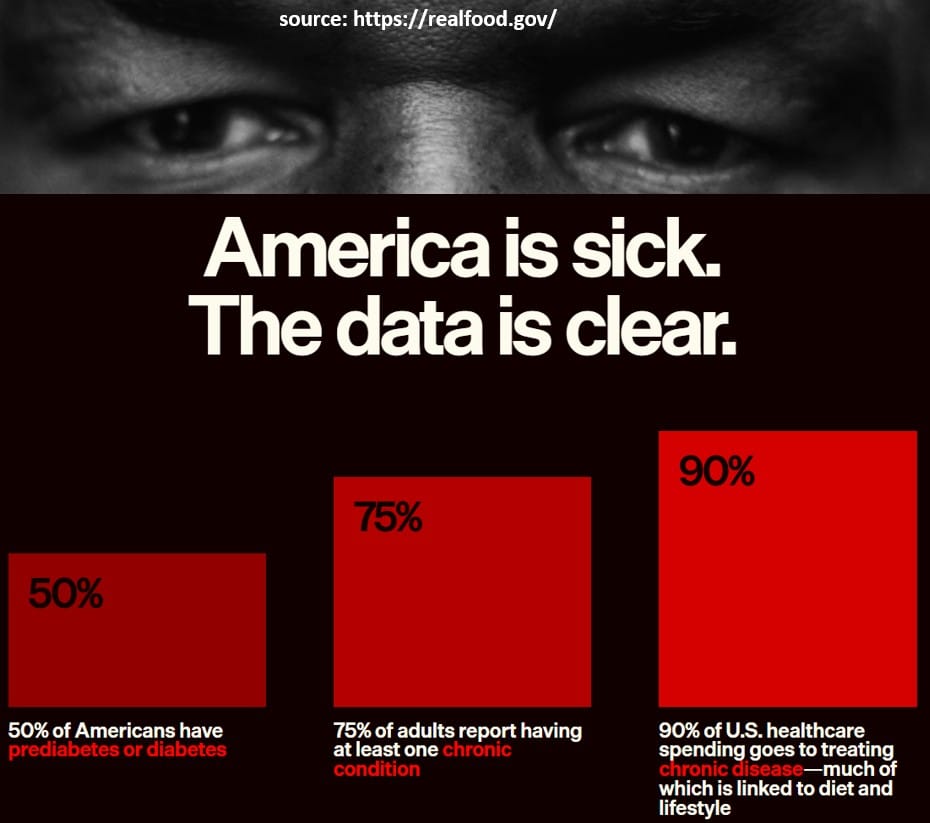
- https://realfood.gov/
- https://www.dietaryguidelines.gov/
- https://www.fna.usda.gov/cnpp/dietary-guidelines-americans
- https://www.hhs.gov/ : Under the Nutrition tab
Summary of “Eat Real Food” Campaign
America is sick. The data is clear.
- 50% of Americans have prediabetes or diabetes
- 75% of adults report having at least one chronic condition
- 90% of U.S. healthcare spending goes to treating chronic disease—much of which is linked to diet and lifestyle
Dietary Guidelines
The tone (like the graphics above) and content of this version (compared to the previous 2020 – 2025 version) has changed significantly (see the red text especially).
- Dietary Guidelines For Americans 2025–2030 (USDA):
- Prioritize whole, nutrient-dense ingredients, and sharply cut down on highly processed products.
- Eat the Right Amount for You:
- Target your Caloric intake based on age, sex, height, weight, and physical activity level. hydrate with water and unsweetened beverages.
- Prioritize Protein Foods at Every Meal:
- Aim for a target range of 1.2 to 1.6 grams per kilogram of body weight.
This is equivalent to .54 to .73 grams per lb of body weight.
- Consume Dairy:
- 3 servings per day shifting specifically toward full-fat dairy products with no added sugars.
- Eat Vegetables & Fruits Throughout the Day:
- Fresh with minimal added sugars
- Target roughly 3 servings of vegetables and 2 servings of fruit daily.
- Incorporate Healthy Fats:
- Keep total saturated fat intake below 10% of daily calories. Use olive oil.
- Focus on Whole Grains:
- 2 to 4 servings per day of whole grains.
- Drastically reduce highly processed, refined carbohydrates like white bread and packaged snacks.
- Limit Highly Processed Foods, Added Sugars, & Refined Carbohydrates:
- Target no more than 10 grams of added sugar per meal).
- Limit Alcoholic Beverages:
- Cut back. None for pregnant women.
- Comments on Sodium:
- Adults (ages 14+) on average should consume less than 2,300 mg of sodium daily
- Special Populations & Considerations:
- Specific guidelines for pregnant women and children (the first 6 months continuing to 2 years or beyond).
- Tailored nutrient-dense approaches for older adults.
Warning. Caveat Emptor: Let the Buyer Beware!
You need to understand that the HHS and USDA collaborate to produce the Dietary Guidelines for Americans, but this document is also supposed to be vetted/endorsed by an independent, non-governmental scientific authority called the “National Academies of Sciences, Engineering, and Medicine (NASEM)”.
The NASEM overseas the Dietary Reference Intakes (DRIs) which establish baseline nutritional guidelines. (more on these later).
The 2025 – 30 Dietary Guidelines for Americans (DGA) did not undergo the full vetting process and did not get full buy in from the NASEM.
Basically we now have the output of a Federal policy campaign (the DGA) which is not fully consistent with the existing DRIs (around protein for example and potentially around fat).
Until the DRI’s are updated (or even if they are not updated), I think the following approach is prudent:
- Treat the official DRI and NASEM numbers as your baseline ( to ensure you meet your minimums for macro and micro nutrients)
- Then, evaluate the Dietary Guidelines for Americans based on your
- goals,
- analysis of data,
- medical history and
- risk tolerance
I think some of the policy is a no brainer (e.g. avoid processed foods) but others will require your personal discretion like
- how much whole milk you need versus the quality and quantity of fat in your current diet and
- how many daily grams of protein above the DRI are good for you. There seem to be a lot of authoritative voices that argue for higher than DRI protein (e.g. .73 g/lb weight) but you need to decide for yourself.
Measure Yourself !
My advice to you is, for some period of time, make a concerted effort to measure your average daily caloric intake, macro-nutrition intake, and micro-nutrition intake.
It took me about 3 months to get a good understanding of my numbers.
- You should understand how many Calories (kcal) you consume on average each day.
- You should do this to see how you measure against the recommended guidelines.
- More importantly, you need a baseline and reference point from which to measure from if you are trying to lose or gain weight.
- You can get free on-line tools or phone apps to easily do this (e.g. Myfitnesspal , Cronometer, or others) .
- You do this until you roughly know and trust your numbers.
- Finding a good digital scale will help you measure your food intake quantities as well.
- While you are doing the above, you should be tracking the macronutrients and micronutrients you are ingesting and how they measure against the dietary guidelines.
- This information will help you adjust your macronutrient ratios and also design and adjust your food intake (or supplements) in order to meet the daily intake guidelines.
Physical Activity Guidelines for Americans
You can download the latest guide here ( Latest Physical Activity Guideline Document ). Here is a summary of the document:
- Everyone. Move more. Sit less!
- Doing both aerobic and strength building activities
- improves/increases cognitive functions.
- improves bone health.
- improves fitness.
- improves heart health.
- reduces depression.
- reduces risk of several cancers.
- reduces risk of dementia.
- reduces injury from falls.
- prevents excessive weight gain.
- alleviates existing conditions.
- Kids aged 3 to 5 years need to be active at least 3 hrs/day.
- Kids aged 6 to 17 years need to exercise 1 hour a day: aerobic + strength training.
- Adults need to get 150 to 300 minutes (2.5 to 5 hours) per week of exercise: Aerobic + strength exercises.
Some other great resources are:
- Mayo Clinic Fitness Basics
- Mayo Clinic: Importance of Strength Training
- WebMD: Benefits of Strength Training
My advice:
- Think long term. Create workable permanent routines.
- You should have an organized workout at least 2 times a week. It should be a priority for you. If you’re new to it, commit to 15 minutes per workout. Move it up to 30 minutes gradually. Eventually get this up to at least 1 hour.
- Incorporate strength building, aerobics, and stretching routines into your workouts. See the exercise links in Appendix 4.
- Listen to your body and adjust your workout intensity and duration accordingly (sometimes taking a break and letting your body heal is the best thing you can do).
- I exercise regularly and try to follow the American Dietary Guidelines for Americans. My view is that you can probably achieve most of your goals if you just work out regularly, eat a wide ranging assortment of foods, and be generally aware of your caloric intake.
Diet and Fitness Plan – Introduction
The following sections describe the steps of my diet and fitness plan. Keep these points in mind as you read the following sections:
- Yes, I have done rigorous Calorie and nutrient counting. Enough to know what my consumption ranges are.
- How can you improve or adjust if you are not measuring?
- The good news is I didn’t have to do this for too long; just long enough to understand what my eating habits were and what kind of nutrition I was getting each day (compared to the Dietary Guidelines for Americans 2020-2025 version).
- I use U.S. government dietary and physical activity guidelines. These ought to be applicable to anyone on earth. There are probably equivalent EU guidelines that you could substitute in for the American guidelines, but I have not verified this.
- I try to avoid an all-or-nothing attitude. I violate my plan sometimes. I give myself a break sometimes. I want my plan to be sustainable and flexible. My attitude is, even if I only do some of the plan, I’m still a hell of a lot better off.
- My body and mind pretty quickly give me positive feedback that I am doing some beneficial things. I look for positive signs like:
- Are my body aches and pains manageable or maybe even diminished?
- Do I sleep well?
- Do I feel good after a meal and drinks?
- Have the frequency and intensity of my headaches diminished?
- Is my fitness (aerobic and strength) improving?
- Am I moving in the right direction towards my weight target?
- Am I generally happy with a positive attitude?
In the next section, I’ll describe the general steps of my diet and fitness plan.
Diet and Fitness Plan – Outline
Here are the general steps I follow. Some steps are done all the time, others are done as needed.
- Have a yearly annual physical exam with a qualified doctor (one with an M.D. or international equivalent).
- Use U.S. government and other reputable sources for your health and diet information. Use advice and information from qualified people (MD Doctors, RD or RDN Registered Dieticians, people with an MS or PhD in Nutrition).
- Calculate your Body Mass Index or BMI (based on your age, weight and height) to see if you are in a normal weight range.
- Estimate your body fat %
- Compute your Basal Metabolic Rate or BMR to determine an estimate of your body’s at-rest energy consumption.
- Calculate your Total Daily Energy Expenditure or TDEE , which is the BMR adjusted for your daily level of activity.
- Determine if you want to lose weight on some time basis (or gain weight) and adjust the TDEE by adding or subtracting those kcals (Calories).
- Develop targets for your Macronutrients (% of total kcals consumed for Proteins, Carbohydrates, and Fats).
- Track your daily caloric and nutrient (vitamins, minerals, macronutrients) intakes and adjust based on your targets.
- Eat to meet your targets.
- Exercise regularly with a combination of aerobic, strength, and flexibility exercises.
We’ll cover these items in more detail in the following sections.
Calculate your Body Mass Index
In general, being overweight is not healthy. I say “in general” because this might have some exceptions based on some articles I’ve read.
During your annual physical, your height and weight will be taken and your doctor will know your Body Mass index. But its an easy calculation if you want to do it yourself.
The Body Mass Index or BMI was created way back in the 1830s by Lambert Quetelet, a Belgian scientist. It is defined as the ratio of a person’s weight (in kg) to their height squared (m^2). It was given the name BMI in the 1970s.
BMI = (weight in kg)/(height in m)^2
The BMI determines your weight category as follows:
- BMI < 18.5 = Underweight
- BMI of 18.5 < BMI < 24.9 = Normal Weight
- BMI of 25 < BMI < 29.9 = Overweight
- BMI > 30 = Obese
BMI is A Screening Tool
The CDC and other government agencies (NIH’s MedlinePlus) advocate use of the BMI as a general weight indicator. According to the CDC, “At an individual level, BMI can be used as a screening tool but is not diagnostic of the body fatness or health of an individual.”.
Based on the CDC quote, you can conclude that the BMI is just a general indicator that might be indicative for most people.
The BMI tends to overestimate “fatness” in muscular people (See article: BMI is Accurate Enough for Most People).
The article you can find here (Why BMI is inaccurate and misleading ) explains that some advocates are suggesting the BMI be replaced with a more “accurate indicator” e.g. having the height term in the BMI raised to the 2.5 versus 2, or creating a new Waist-Circumference-to-Height indicator.
Refer to the table below for guidelines on healthy fat ranges (and associated BMI ranges) from a 2000 article in The American Journal of Clinical Nutrition.
Predicted Percentage Body Fat by Sex and BMI Range (Asian Values in Brackets)
| (Sex)BMI Range | 20-39 yrs | 40-59 yrs | 60-79 yrs |
|---|---|---|---|
| (W)BMI<18.5 | 21(25)% Fat | 23(25) | 24(25) |
| (W)BMI >=25 | 33(35) | 34(35) | 36(36) |
| (W)BMI>=30 | 39(40) | 40(41) | 42(41) |
| (M)BMI<18.5 | 8(13) | 11(13) | 13(14) |
| (M)BMI >=25 | 20(23) | 22(24) | 25(24) |
| (M)BMI>=30 | 25(28) | 28(29) | 30(29) |
https://academic.oup.com/ajcn/article/72/3/694/4729363
Estimate your Body Fat %
Read the following article from Harvard’s Nutrition Source website: Harvard NutritionSource – Measuring Fat
Fat serves several important functions in our body.
Fat stores energy, influences our metabolism and immunity functions, etc. High fat amounts increase the odds of getting type 2 diabetes, cardiovascular disease, stroke and cancer.
According to the Harvard article in the link above, Essential Fat in the body is vital for normal body functioning and should stay above 5% for men and above 10% for women. (% of total weight).
Consider the table below from the American Exercise Council for some general fat% guidelines for women and men.
Percent Body Fat Norms for Men and Women
| Description | Women | Men |
|---|---|---|
| Essential Fat | 10%-13% | 2%-5% |
| Athletes | 14%-20% | 6%-13% |
| Fitness | 21%-24% | 14%-17% |
| Acceptable | 25%-31% | 18%-24% |
| Obesity | >32% | >25% |
Body Fat Estimation Methods
Estimating or measuring your fat composition can be done several different ways.
The most accurate, like DXA or Hydrostatic Weighing, are also more expensive.
Waste circumference or ratio of waste to height or ratio of waste to hip have been suggested as indicators of “fatness” .
Skinfold caliper techniques or body circumference techniques are cheap (free) to do and probably sufficiently accurate for most of us.
Read more about the various techniques in Appendix 5.
The Navy and Army body circumference based fat estimation models are easy to use and can provide (for most of us) an adequate first guess as to what our fat composition might be.
Navy Equation (See Appendix 5 for details)
- Men: %BF = 495 / ( 1.0324 – 0.19077 * log10( waist – neck ) + 0.15456 * log10( height ) ) – 450 ; Use cm units.
- Women: %BF = 495 / ( 1.29579 – 0.35004 * log10( waist + hip – neck ) + 0.22100 * log10( height ) ) – 450 ; Use cm units.
Army Equation(See Appendix 5 for details)
- Men: %BF = (86.010 * log10( waist – neck ) ) – [70.041 * log10(height)) + 36.76 ; Use inch units
- Women: %BF = (163.205 * log10( waist + hip – neck ) ) – (97.684 * log10(height)) – 78.387 ; use inch units
Energy is Conserved
So, between your annual physicals and your approximate BMI and % fat indicators, you should have a (somewhat) scientific assessment of whether you are overweight or not (or underweight for that matter).
Now, you want to set some kind of target weight going forward. You might want to reduce weight, gain weight, or just maintain your current weight.
Before we do that, we have to understand the concept of mass and energy balances.
Our bodies are open systems in which numerous chemical reactions occur when we consume food.
- The entirety of these reactions is called metabolism.
- Some of these reactions break down cells and produce energy, others build up cells into bigger cells (amino acids into proteins in muscle for example).
- All the mass(energy) coming in MUST equal all the mass and energy that either accumulates in or leaves the body.
- There will be losses from waste and heat. The body expends energy for internal bodily functions as well as external activities (e.g. exercising). Hopefully you get the point that it’s a complicated picture.
The food ingested itself adds to the complexity.
- High Protein amounts tend to boost metabolism ( NIH: Protein as a high thermic food TEF or DIT) .
- Carbohydrates can increase insulin levels more than proteins will, thus triggering the body to increase fat storage (although I don’t see a consensus in the literature about how impactful this is to a diet: NIH: Correlation of Hi GI to being overweight).
- Certain foods have higher satiety effects than others. Myriad other factors (environmental, physical) could affect the way the body manages its food intake.
Energy Balance
Regardless of all the complexities, we can express a general energy balance around our bodies as :
Energy Changes in the Body = Energy Intake – Energy Expenditure
Where:
- Energy Intake = Energy from food and liquid consumed
- Energy Expenditure = Energy absorbed for internal bodily functions for body growth and maintenance + Energy used for physical activity + Energy lost to the environment (e.g. sweat, urine, feces).
The unit of measure of energy used is the kilo calorie which is equivalent to the dietary Calorie (1 Calorie = 1 kilo calorie). The useable energy contents of the three macronutrients are as follows:
- Carbohydrates: 4 kcal/gram
- Protein: 4 kcal/gram
- Fat: 9 kcal/gram
If we focus on the useable energy balance, in terms of Calories (kcal), we can ignore the solid and liquid waste in our equation (feces, urine).
Any losses of energy to the environment through the body (i.e. heat from your skin), we will just assume is part of the Energy Expenditure term.
BMR and TDEE
We can estimate energy used for internal body functions by using the Basal Metabolic Rate or BMR.
The BMR estimates the resting internal energy expenditure of the body.
The most frequently used correlation for BMR is the Mifflin-St. Jeor Equation:
- Male BMR (kcal/day) = 10W + 6.25H – 5A + 5 ; W = body weight in kg, H =body height in cm, A is age in years
- Female BMR(kcal/day) = 10W + 6.25H – 5A – 161 ; W = body weight in kg, H = body height in cm, A is age in years
We can estimate the energy needed for additional physical activity by using BMR activity multipliers (Katch-McKardle activity factors):
- Sedentary = 1.15
- Light Activity = 1.3 ; 1- 3 hrs/week
- Moderate = 1.5 ; 4- 6 hrs/week
- Active = 1.7; 7-9 hrs/week
- Very Active = 1.9 ; 10+ hrs/week
Let’s define the TDEE as the Total Daily Energy Expenditure in kcal/day.
- This is the energy required by your body taking into account your Basal Metabolic Rate and your normal lifestyle activities:
- TDEE = BMR x Activity Multiplier.
As previously noted, since we are only accounting for usable energy, we can ignore solid waste losses.
We will assume the other losses are included in the TDEE number.
We can now substitute into our energy equation:
- Energy Changes in the Body = Energy Intake – Energy Expenditure = Food kcal/day – TDEE kcal/day
Energy Equation Values are Approximations
Putting generic values to the energy equation is just not going to be that accurate for most of us.
The TDEE term depends on a lot of factors that will vary from individual to individual. Some of the variables that can affect TDEE are: Mayo On Metabolism ; NIH on Metabolism
- BMR correlations are based on a population. They are not necessarily going to be accurate for any individual.
- Amount of Muscle in your body. Muscle burns ~3x as many Calories (kcal) as fat. More muscle means higher BMR. (But is it enough to be impactful?)
- Your activity level (we can use activity factors to account for this but they are just approximations).
- The energy required to digest the three macronutrients are different: (re TEF of macronutrients)
- For each 100 kcal (Calorie) consumed: 20 to 30 kcals are required to digest Proteins; 5 to 10 for Carbohydrates; 1 to 3 for Fats
- Certain chemicals in your body can only be selectively metabolized while others are not as limiting. (e.g. NIH: A tail of 2 sugars )
- High glycemic index foods (e.g. certain carbohydrates) cause insulin to spike and ultimately cause fat deposition in the body, although I’m not sure how meaningful this is ( NIH: Scant Evidence for Hi vs Low GI on weight ).
- Your metabolism will naturally compensate to a change in diet over time ( NIH on diet and weight loss ) meaning you wont lose weight in a linear fashion and you wont lose as much as you expect to lose (using simple equations).
Plenty of Conflicting Data Out There
Listen, I challenge you to get any kind of consensus on just about any dietary topic by doing an internet survey.
My assessment is that there is a lot of conflicting information out there.
I would therefore lean on government or academic provided research which needs to be evidence based.
In the end you will have to apply a little common sense and rely on your body for feedback on whether you are doing the ‘right’ things.
Notwithstanding all the above, we are still going to use the energy equation to establish our diet targets.
But, we are going to be practical and we are going to establish our expectations accordingly:
- The process of finding the right formula or equation for you will be based on trial and error (iterative).
- You will adjust as needed based on actual feedback from your body
Weight Target Example
We have enough information and understanding now to go through an example of how to find the required Energy Intake (kcal from food intake) to meet our weight reduction goal.
Let’s review the energy equation again written in two versions:
(1) E(weight increase in fat): (Energy Intake – Energy Expenditure) > 0
(2) E(weight loss of fat): (Energy Intake – Energy Expenditure) < 0
So, how many kcal should we assume is in 1 lb of weight loss or gain in a human? If we assume that the weight is mostly fat (should be) , then we know that the energy content of fat is 3500 kcal/lb (1588 kcal/kg).
Ok, given the above, let’s assume, based on your indicators, consults with your doctor, and your own personal goals, that you want to reduce your weight by 20 lbs (9.1 kg):
- Your statistics are: Male, 45 years, weigh 170 lb (77 kg), height 5 feet 8 inches (173 cm), activity factor 1.7
- You want to lose 20 lb (9.1 kg) over 6 months which is .83 lb/week (.38 kg/week).
- .8333 lb/week x 3500 kcal fat/lb x 1 week/7days = 416.7 kcal/day = kcal/day reduction in order to lose 20 lbs in 6 months
- BMR = 1631 kcal/day; TDEE = 1.7 x BMR = 2,772 kcal/week = the energy expenditure at your current weight
- Apply Equation (2): Loss in Weight in kcal/day = 416.7 = Energy Intake – Energy Expenditure = Food Intake – TDEE
- So your lose-weigh Food Intake target needs to be TDEE – 416.7 = 2355 kcal/day
Due to reality getting in the way of our nice equations, we are not quite done yet.
Weight Target Example: Final Adjustment
Weight loss over time while dieting is non linear and tends to be compensated for with a reduction in metabolism (see NIH report).
The kcal/day reduction target is probably going to be bigger than the 416.7 kcal/day we estimated above.
- To finish our example, we will adjust the 416.7 kcal/day target to 416.7 x 1.2 = 500 So, the lose-weight target will be TDEE – 500 = 2272 kcal/day
- So you have to consume 2272 kcal/day to lose about 20 lb in 6 months.
The interactive model in this post has an adjustment factor that can be entered to account for this (assume 1.2 factor as a starting point).
There is also an NIH created model you can use that should give you roughly the same result as my model if you use the adjustment factor of 1.2. You can find the NIH model via this link. NIH Body Weight Planner Model ; Body Weight Planner Video .
I’ve put a little effort into making sure you know this is not super exact stuff.
But, that really does not matter.
We want to have a starting point; a starting target from which we can modify and revise as needed.
In our example, you have a daily dietary target of 2272 kcal (Calories).
Over the next 6 months you should see progressive weight reduction.
You can make adjustments as needed based on your weight monitoring.
Dietary Guidelines for Americans Macro and Micro Nutrient Targets
Ok, so at this point we’ve developed a Calorie/day (kcal/day) target that will hopefully allow us to move in the right direction towards our weight goal.
An important second step is to develop some kind of nutrition monitoring plan to see if you are getting at least the minimum amounts of the basic food groups (macronutrients) and Vitamins and Minerals (micronutrients).
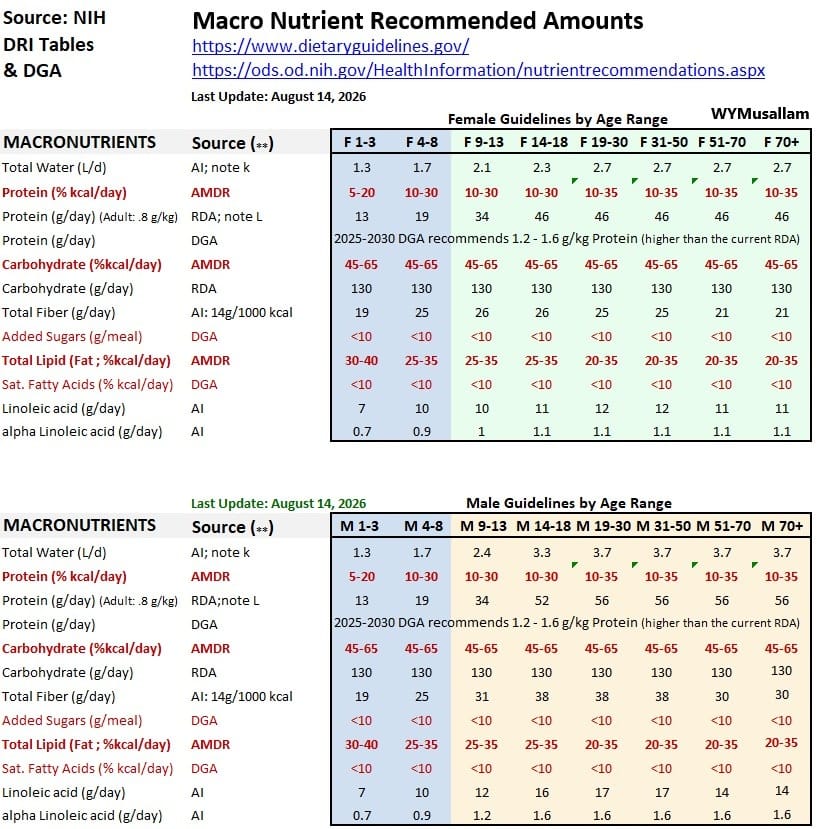
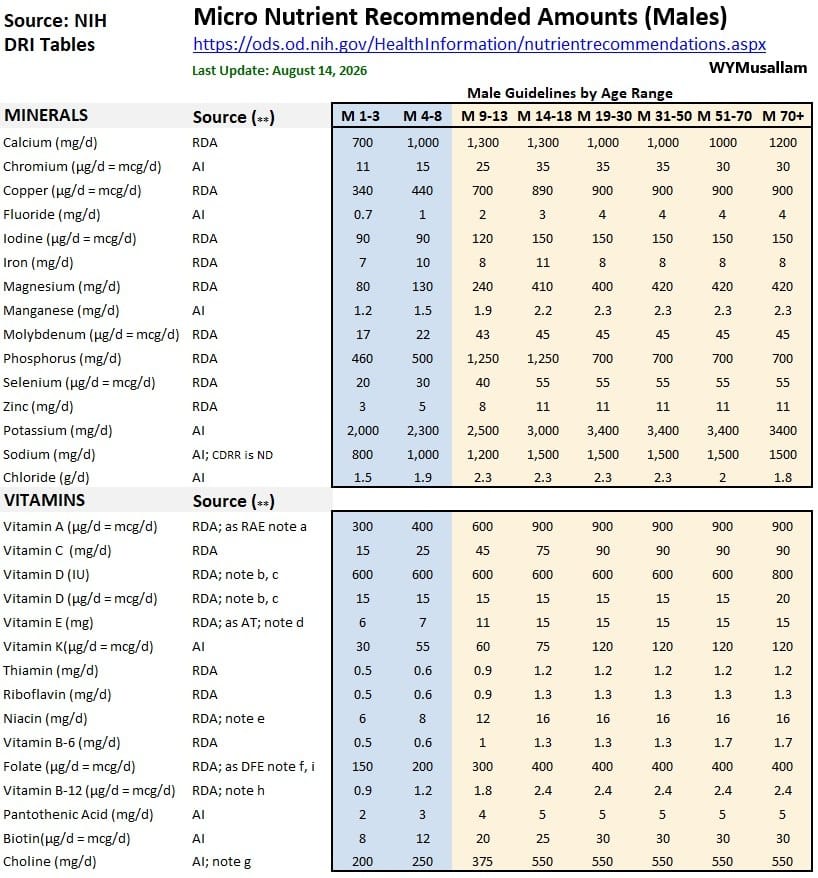
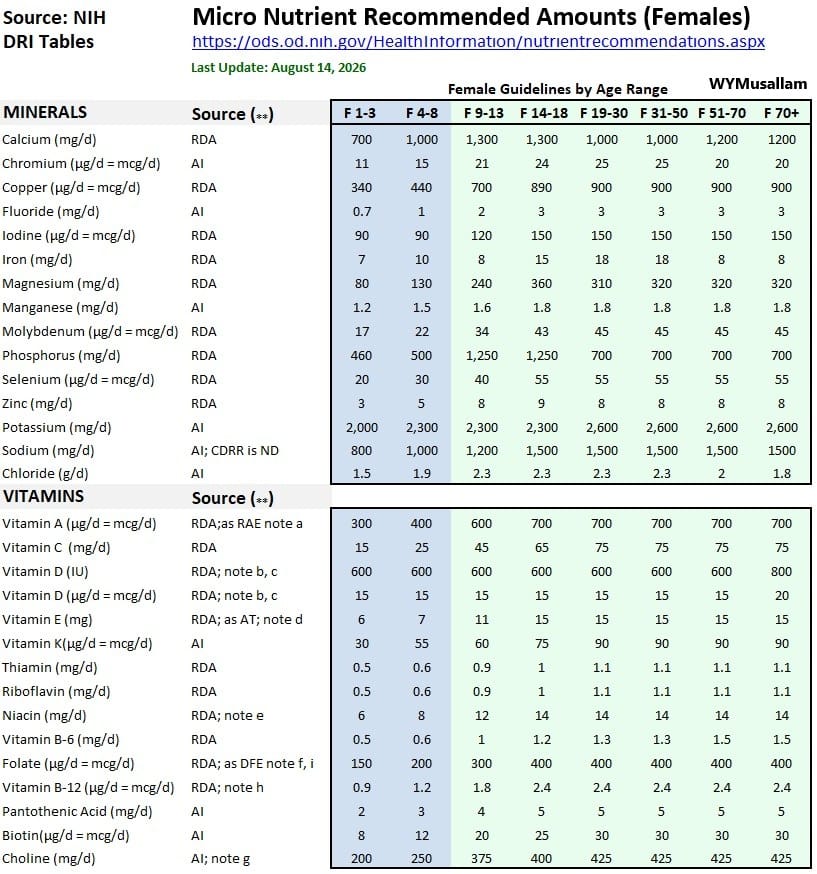
We can establish a macronutrient plan and start monitoring our micronutrient intakes (See tables 1 through 7 below).
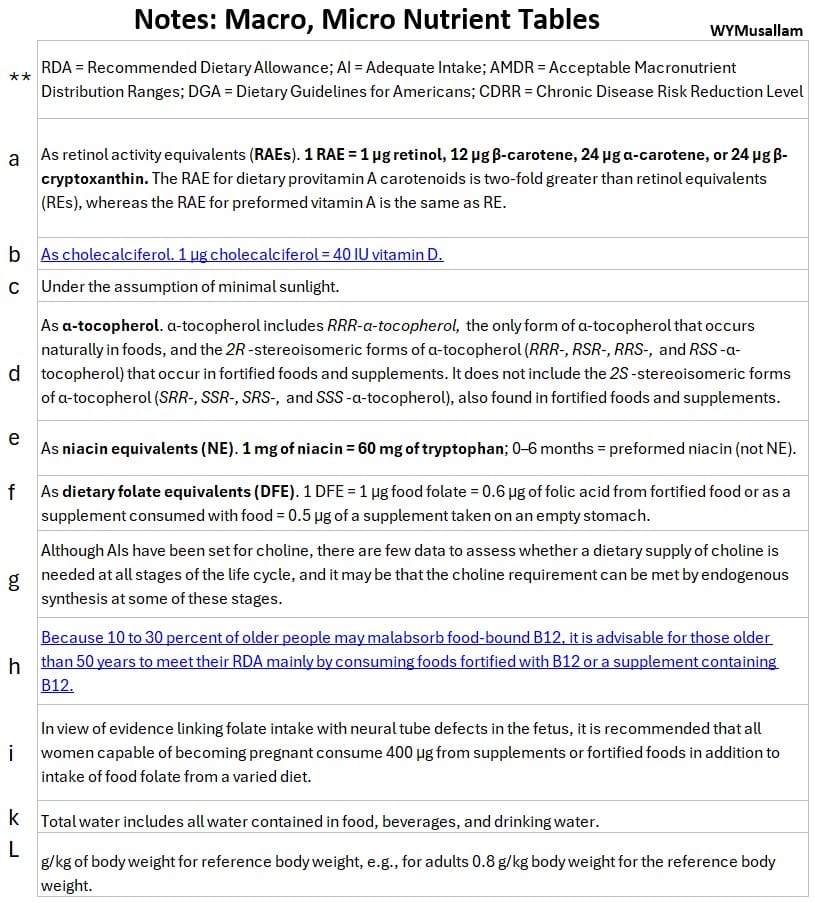
Note: The tables below were created from the tables of Appendix 1 in the old Dietary Guidelines for Americas (2020 – 2025 version). They decided to just remove all that great data from the DGA 2025 – 2030 version which came out in February 2026. You now have to go to the following government web site to get it:
Then scroll down to the section titled DRI Tables and access the linked tables from there. (DRI = Daily Reference Intake. DRI is the umbrella term for all the numbers provided by the National Academies of Sciences, Engineering, and Medicine (NASEM)).
Table_1 – DRIs – 2020-2025 – Males – Macros

Table_2 – DRIs – 2020-2025 – Males – Minerals

Table_3 – DRIs – 2020-2025 – Males – Vitamins

Table_4 – DRIs – 2020-2025 – Children & Females – Macros

Table_5 – DRIs – 2020-2025 – Children & Females – Minerals

Table_6 – DRIs – 2020-2025 – Children & Females – Vitamins

Table_7 – DRIs – 2020-2025 – Definitions, Notes, Sources

The numbers in the tables are the important part but if you want to get a little more clarity on the terminology, read on.
Chart: U.S. Nutritional Standards Nomenclature
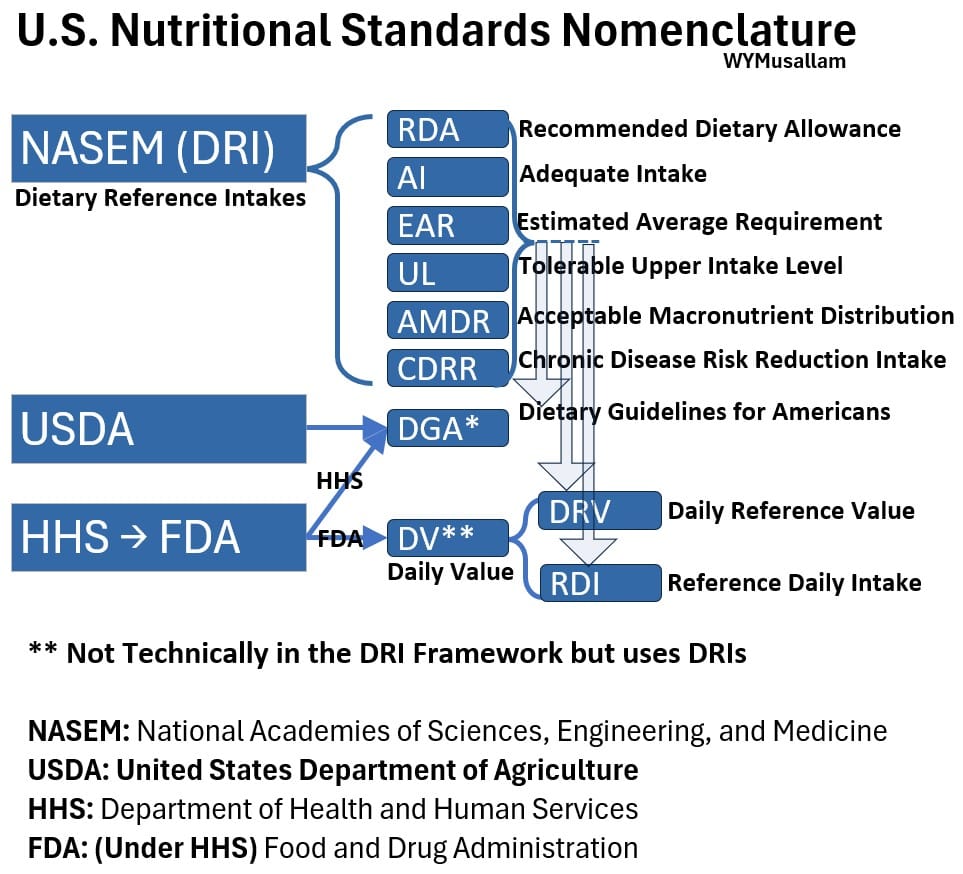
- The independent scientific body that establishes the clinical nutrient framework (DRI Daily Reference Intake), which includes individual benchmarks:
- RDA – Recommended Dietary Allowance: (adequate daily intake for nearly all healthy individuals),
- AI – Adequate Intake (estimated intake used when data lacks for an RDA),
- EAR – Estimated Average Requirement (intake meeting the needs of half the population),
- UL – Tolerable Upper Intake Level (maximum safe daily intake limit),
- AMDR – Acceptable Macronutrient Distribution (recommended calorie distribution ranges for macros), and
- CDRR – Chronic Disease Risk Reduction Intake (intake thresholds for reducing chronic disease risk).
USDA (U.S. Department of Agriculture) & HHS (Department of Health and Human Services)
The joint federal departments that use NASEM’s scientific baseline to create the DGA (Dietary Guidelines for Americans), providing broad, evidence-based public eating and lifestyle recommendations.
FDA (Food and Drug Administration)
The regulatory agency housed under HHS that translates the science into
- DV (Daily Values)—practical, consumer-facing label standards split into
- RDI – Reference Daily Intake (for vitamins, minerals, and proteins) and
- DRV – Daily Reference Value (for macronutrients and components without traditional RDAs).
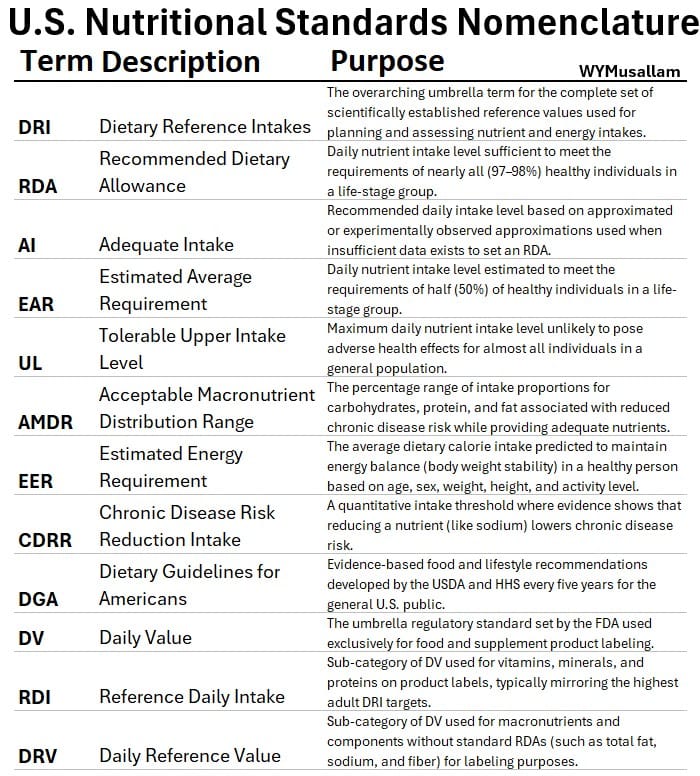
Table: U.S. Nutritional Standards Nomenclature
Setting Macronutrient Targets
Let’s continue with our previous example of
- a 45 year old male,
- weighing 170 lb,
- 5’8″ tall,
- with an activity factor of 1.7.
His target reduction weight of 20 lbs translates to about 2272 kcal/day of food intake.
Let’s establish some macro targets for this person.
From Table 1 in the previous section, the recommended target ranges are,
- 10-35% (of total kcal/day intake) Protein,
- 45-65% Carbohydrates, and
- 20-35% fats.
- Limit added sugars to < 10% and
- limit saturated fats to <10%.
Those ranges are pretty wide so where does that leave us?
How shall we set these percentages? In our example, we are going to assume the following ranges:
- Assume the max Protein target of 35% of total daily Calories. There is a lot of evidence that high protein diets help speed weight reduction ( HPD benefits), so we will start with the maximum value.
- In fact, the 2025-2030 DGAs now recommend a higher target for protein (.54 to .73 grams / lb weight or 1.2 – 1.6 grams/kg weight)
- Pick 45% for the Carbohydrates target.
- That leaves 20% Fat target by difference: 100-35-45 = 20%
Don’t get hung up on micro fine tuning your macro targets.
Just start somewhere, honoring the limits.
You can re-adjust these targets once you get some real time feedback from your body.
Next , let’s find out what our micronutrient targets are.
Micronutrient Targets
Continuing with our example of the 45 year old male who is targeting 2272 kcal/day, we can look up the recommended micronutrient quantities (or adequate quantities) from the DRIs (Dietary Reference Intakes)
Table_2 and 3.
For example, some of the mineral targets would be (from Table_2) :
- Calcium: 1000 mg = milligrams
- Iron:8 mg
- Magnesium:420 mg
- etc.
Some of the vitamin targets would be (from Table_3):
- Vitamin A: 900 mcg = micrograms
- Vitamin E:15 mg
- Vitamin D: 600 IU = 15 micrograms
- etc.
Note that recommended quantities are based on a baseline Calorie intake (kcal).
The interactive model in this post will adjust the value relative to the actual Caloric intake. In this example, they are close enough so we’ll just use the values straight from the tables.
In the beginning I think its important to track these nutritional intakes on a daily basis so a baseline can be established for you.
Knowing your macronutrient % breakdown will allow you to make adjustments as needed.
Knowing your micronutrient intakes compared to the recommended allowances, allows you to adjust your diet accordingly or even start taking the correct vitamin and mineral supplements.
For example, I found that I was not getting sufficient magnesium and potassium and calcium in my diet.
I’ve made adjustments to my diet and the supplements I take to correct that.
Tracking Your Targets
There are several phone (computer) applications that can be used to track macronutrients and micronutrients.
Two examples are myfitnesspal and cronometer.
These tools are fantastic in that they possess detailed databases of nutritional information on all sorts of raw foods and commercial food products.
They also have all the latest nutritional guidelines. They even allow you to automatically download commercial food product nutrient compositions via bar code scan.
An excellent resource is the U.S. Department of Agriculture’s FoodData Central web site. You can do food and component (e.g. specific mineral or vitamin) searches.
A great resource for vitamins and other dietary supplements (fact sheets) can be found here: NIH: Dietary Supplement Fact Sheets
I know what you are thinking.
It seems like a major pain in the butt to do this kind of thing, but I think it’s well worth it.
The idea is you do this for some reasonable period of time so you generally know what you are eating and how you are doing against the nutritional guidelines.
It took me about 3 months of fairly diligent tracking.
The general procedure for how to track using one of these apps is as follows:
- Enter your macro targets
- On a daily basis , enter the food type and quantity into the app. You can buy cheap digital scales to help you measure quantities.
- At the end of each day , the app will show you how you measure against your macro and micro targets.
Online Tools for BMI, TDEE, and DGIs
The next section provides an interactive tool that you can use to estimate your fat %, BMI (Body Mass Index) , TDEE (Total Daily Energy Expenditure), and adjusted TDEE to achieve your weight targets.
Or you can just go online to the excellent resources provided to you by your government.
For a BMI calculator and additional information on BMI use these links:
The USDA web site gives you a very nice BMI + TDEE + DRI calculator which you can use.
Recall that the Daily Reference Intake (DRI) is the umbrella term that includes RDAs (Recommended Dietary Allowances), AIs (Adequate Intake) , ULs (Tolerable Upper limits) and a few other things.
The RDAs and AIs are the values listed in the DRI Tables 1 – 6.
The NIH has produced a great tool that estimates your TDEE (current maintain weight) and TDEE(to reach target weight goal). You enter your age and body characteristics and desired weight goal and it spits out your Estimated TDEEs.
Spreadsheet Tool Download
This section contains an interactive calculator you can use to estimate your energy expenditure targets (TDEE) based on your age , gender, physical characteristics, and weight goals.
It also gives you your recommended dietary allowances based on the American Dietary Guidelines for Americans.
If you want to take a closer look at the tool (excel spreadsheet) you can download it here (TDEE Calculator Excel Spreadsheet).
Or you can run the tool interactively in the next section.
Remember the following units of measure and conversions:
- 1000 thermal calories or 1 kcal is equal to 1 dietary Calorie
- Proteins contain 4 kcal/g of useable energy
- Carbohydrates contain 4 kcal/g of useable energy
- Fats contain 9 kcal/g of useable energy
- 1 kg = 1000 grams = 2.205 lb
- 1 lb = 453.6 grams = .454 kg
- mg = milligram = 1 gram/1000
- mcg = microgram = 1 gram/1 million
- IU or International Unit: For Vitamin D 40 IU = 1 mcg
- Note that IU to weight conversion is different based on the component (i.e. Vitamin A vs D vs E all have different conversions)
Interactive Calculator Instructions
- Update the Blue Fonted Cells.
- You can choose between metric or imperial units.
- You can choose to lose, gain, or maintain weight.
- Choose your Macronutrient targets.
The calculator will compute the following:
- BMI – Body Mass Index
- Fat % of total weight
- BMR – Basal Metabolic Rate
- TDEEs (Total Daily Energy Expenditure) to maintain your current weight and to achieve your weight target.
- Macronutrient targets in units of energy and mass (weight)
- Recommended daily allowances for Macronutrients, Vitamins and Minerals
Conclusion
It’s pretty simple; just get out there and work out in a concerted, organized way at least two days a week for starters (barring any specific ailments or conditions that would prevent you from doing it – consult your doctor).
You can increase that to maybe 4 or more days once you get used to the routine.
In my opinion, if you establish a good, sustainable physical fitness routine (with aerobic, core, strength and even balance exercises) and then develop an adequate eating plan, you should get some nice feedback from your body and mind.
Obviously, your fitness routine is gong to be specific for you and based on your exact specifics (health, age, etc.).
Try to follow, as best you can, the Dietary Guidelines for Americans (DGA) and the associated Daily Reference Intakes (DRIs).
It’s dietary information and guidance that you know is not going to be (or let’s say, less likely to be) tainted by conflict of interest and/or possibly fraud.
For some duration, perhaps a month or two, try to diligently monitor you Caloric intake and nutrient intake and compare your numbers to the Dietary Guideline macronutrient and micronutrient tables (just use that online DRI tool for starters).
You’ll probably find you are deficient in some key nutrients.
Try to adjust your diet to get those nutrients or perhaps consider taking dietary supplements (consult with your doctor about this).
You might want to lose weight (or even gain weight).
Use some of the TDEE methods and on-line tools (NIH Body Weight Planner) I’ve described to do this.
Also, check out the wealth of diet and fitness information you can get via the web sites and books listed in Appendices 2, 3 and 4.
Appendix 1 – Can You Trust the Information?
The NIH and Harvard guidelines listed below provide useful guidelines when you are trying to figure out what to believe and what to be doubtful about.
- NIH: Online Health Information: Is It Reliable?
- NIH: How To Evaluate Health Information on Internet
- NIH: Finding and Evaluating Online Resources
- NIH MedlinePlus -Evaluating Health Information
- Harvard Nutrition Source: Diet in the News. What to believe.
The first article linked below is put together well and provides some fantastic additional sources.
You must read the Sagan article and you must view the video by Michael Shermer for some basic guidelines on how your Bull-Shit detector should work.
Appendix 2 – On-Line Government Information
In general, I first go to U.S. government provided/sponsored websites for information and guidelines.
Yes, you can read articles on line claiming that governments might have ulterior motives that are not health based (like subsidizing certain sections of the country’s farming industry etc.).
I would say, start with the government provided sources and then adjust based on your own research and first hand experiences.
The information provided from these sites should be typically evidence based. I have not focused on the listed European sources so there might be additional and better references.
General
- Health Topics Index Including Food-and-Nutrition and Fitness-and-Exercise: https://medlineplus.gov/nutrition.html
- US Government all topics and services including Health related: https://www.usa.gov/health
Dietary Guidelines
- for Americans – DRIs (Daily Reference Intakes), DRI Tool, FoodData Central: NIH nutrient recommendations (DRIs)
- for Americans – 2020-2025 Edition: Dietary Guidelines for Americans DGA
- for Europeans – European Food Information Council
- for Europeans (Interactive Database) – dietary-reference-values
Note: I have not researched or validated the above European sites. There might be better resources. My focus has mainly been on U.S. information sources.
Food/Nutrition Information
- FoodData Central and much more on feed by USDA https://www.nutrition.gov/
- Kinds of Foods, How much and Why. Excellent. By USDA https://www.myplate.gov/
- Feed Safety and Information, Dietary Supplement Information by FDA: https://www.fda.gov/food
- Dietary Supplement Information: NIH Dietary Supplements Multivitamin information
- Nutrition Information by CDC: https://www.cdc.gov/nutrition/
Physical Activity Guidelines
- Physical Activity Guidelines: https://odphp.health.gov/
- Physical Activity Information by CDC: https://www.cdc.gov/physicalactivity/index.html
Appendix 3 – On-Line Non Government Information
Universities, Non-Profits, and Professional Organizations can provide good information as well. I am sure there is excellent information provided in many for-profit web sites as well but just look out for conflict-of-interest situations. Read and watch the information in Appendix 1 to get general guidelines you can follow to determine if the data is trustworthy.
Some University Nutrition Web Sites
For Profit Nutrition Web Sites
- WebMD – This is a for profit organization. Lots of good info but verify depending on topic and intent of use.
- Healthline – This is a for profit organization. Lots of good info but verify depending on topic and intent of use.
Not for Profit Organizations or Journals
- American Council on Exercise – Non Profit.
- Mayo Clinic – Non Profit. See links for Nutrition and Healthy Eating and Fitness.
- American Academy of Pediatrics
- British Nutrition Foundation – a Charity organization
- International Diabetes Federation
- World Cancer Research Fund – Network of Charities
- World Health Organization Fact Sheets – See ‘Healthy Diet’ and ‘Physical Activity’ fact sheets. Great.
- Institute of Food Technologists – Non Profit. See Food Health & Nutrition link
- International Food Information Council – Food Insight is the information hub created and curated by nutrition and food safety experts at the International Food Information Council (IFIC). IFIC is a 501(c)(3) nonprofit educational organization.
- American Institute for Cancer Research – See Healthy Diet and Healthy lifestyle sections (Nice)
- American Cancer Society – See Eat Healthy and Get Active link
- Center for Science in the Public Interest – See Healthy Living link
- Food Allergy Research & Education
- American Heart Association – See Healthy Living link
- Physicians Committee – Non Profit. See Good Nutrition and Health Topics links
- American Diabetes Association
- American Medical Association
- Academy of Nutrition and Dietetics – Advice and Information from registered dietitian nutritionists. See Food, Health, and Fitness links
- The Journal of Nutrition
Appendix 4 – Nutrition / Exercise Books and Web Sites
US Government
The following is probably the one best master menu for accessing US government nutritional information.
You can access the Dietary Guidelines for Americans via these links
- https://realfood.gov/
- https://www.dietaryguidelines.gov/
- https://www.fna.usda.gov/cnpp/dietary-guidelines-americans
- https://www.hhs.gov/
To compute your precise calorie, macro, mineral, and vitamin targets matching the data structure you use, you can directly access the official federal tools and reference repositories provided by the USDA and the National Agricultural Library:
The Interactive Calculator: Use the USDA DRI Calculator for Healthcare Professionals.
- By entering your exact age (50), sex, height, weight, and activity level, this tool
- generates a complete report of your estimated calorie needs, BMI, and full targets for macronutrients, water, vitamins, and minerals.
The Master Reference Tables: You can also browse the USDA National Agricultural Library Nutrient Recommendations and Databases.
This portal links directly to the official Dietary Reference Intake (DRI) tables for vitamins, elements (minerals), macronutrients, and Acceptable Macronutrient Distribution Ranges (AMDR).
Food Composition Data: To check the nutritional values of specific whole foods against your targets, use USDA FoodData Central, which houses the complete federal database for nutrient profiles.
AI – Artificial Intelligence Tools
Here is what I’ve recently done.
- I got on to my free Google Gemini (you could use this or ChatGPT or Claude etc.)
- I gave it specific details about me
- Gender
- Age
- Height
- Weight
- Body issues (e.g. sore knees, shoulders, back etc. etc..)
- A rough description of my activity level
- A rough description of the sports I play and any issues that need improvement (e.g. I play golf but I have a weak back or my core is weak or my balance is weak etc.)
- For my age and my specifics I wanted a focus on: strength to maintain muscle mass, core strength (stomach, back), aerobic fitness and stability (balance).
- I told it I liked to swim, run, bike
- I Asked it to develop a weekly fitness routine designed specifically for me taking into consider my status and condition and the activities I liked to do.
- I asked for 4 , 5 , and 6 day routines
- I am currently testing which regimen works best for me
- I am adjusting and re-iterating with the AI tool and with other on line information sources to optimize the specific exercises (e.g. using dumbbells vs barbells vs machines based on my specific body issues)
It doesn’t have to be perfect.
Just get the hell out there and start moving and lifting (you need strength, so don’t forget to lift)!
Metabolism and Digestion Concepts
- Awesome Simple Tutorial on Metabolism
- Khan Academy: bioenergetics and metabolism
- Khan Academy: Metabolism-Anabolism-Catabolism
Food and Nutrition
Michael Pollan Books – “The Omnivore’s Dilemma”, “Food Rules”, “In Defense of Food”
The omnivore’s dilemma will open your eyes a little regarding the meat processing industry.
Exercise Libraries/Videos
- Mayo Clinic Strength Training How To Videos
- www.mayoclinic.org fitness
- https://health.clevelandclinic.org/types-of-exercises
- https://www.muscleandstrength.com/
- https://tigerfitness.com/pages/exercise-database
- https://www.jefit.com/exercises
- https://www.youtube.com/@TIFFxDAN
- https://www.bodybuilding.com/exercises
- https://www.nasm.org/exercise-library
- https://www.acefitness.org/resources/everyone/exercise-library/
- https://exrx.net/Lists/Directory
- https://darebee.com/workouts.html
- https://weighttraining.guide/exercises/

Appendix 5 – Body Fat Estimation/Measurement Methods
Estimating or measuring your fat composition can be done several different ways.
The most accurate, like DXA or Hydrostatic Weighing, are also more expensive.
Waste circumference or ratio of waste to height or ratio of waste to hip have been suggested as indicators of “fatness” .
Skinfold caliper techniques or body circumference techniques are cheap (free) to do and probably sufficiently accurate for most of us. Read more about the various techniques in these two links.
- https://www.hsph.harvard.edu/nutritionsource/healthy-weight/measuring-fat/
- Body Fat Estimation Methods
I’ve used the Navy and Army body circumference based fat estimation models in my calculator.
- They are easy to use and are probably (for most of us) an adequate first guess as to what our fat composition might be.
Here’s more information on these two U.S. military methods.
Navy Equation
https://www.omnicalculator.com/health/navy-body-fat
Source Paper: Prediction of Percent Body Fat for U.S. Navy Men from Body Circumference and Height. by James A. Hodgdon, Marcie B. Beckett
1984; Report No. 84-11, Supported by the Naval Medical Research and Development Command
Military Standards for Fitness, Weight, and Body Composition
Men: %BF = 495 / ( 1.0324 – 0.19077 * log10( waist – neck ) + 0.15456 * log10( height ) ) – 450 ; Use cm units.
Women: %BF = 495 / ( 1.29579 – 0.35004 * log10( waist + hip – neck ) + 0.22100 * log10( height ) ) – 450 ; Use cm units.
Developed at the Naval Health Research Center (NHRC), San Diego, California. https://www.omnicalculator.com/health/navy-body-fat
Army Equation
https://www.omnicalculator.com/health/army-body-fat
Men: %BF = (86.010 * log10( waist – neck ) ) – [70.041 * log10(height)) + 36.76 ; Use inch units
Women: %BF = (163.205 * log10( waist + hip – neck ) ) – (97.684 * log10(height)) – 78.387 ; use inch units
Other On line Calculators
This calculator uses several skinfold (caliper) methods and the Navy Circumference Method.
Disclaimer: The content of this article is intended for general informational and recreational purposes only and is not a substitute for professional “advice”. We are not responsible for your decisions and actions. Refer to our Disclaimer Page.